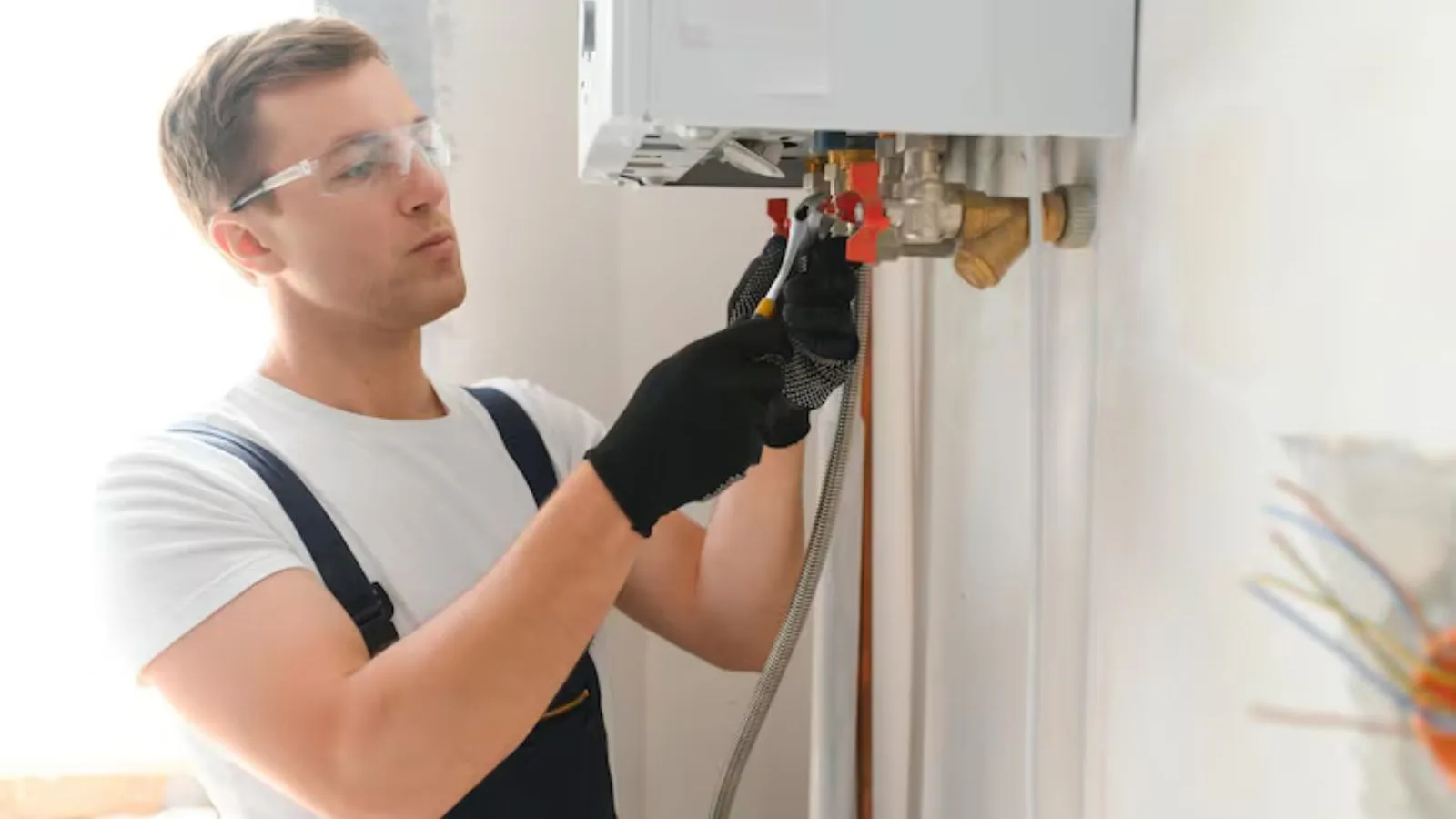
A tankless water heater that is throwing an error code, delivering lukewarm water, or making a rattling sound during operation almost always needs a descale service rather than a full replacement, and mineral scale on the heat exchanger is the most common cause.
Why Tankless Units Need Regular Service
A tankless unit heats water on demand by running it across a heat exchanger, and mineral deposits from hard water build up on that exchanger over time. Once enough scale accumulates, the unit's flow sensor reads incorrectly, triggering an error code even though nothing has actually broken.
Manufacturers generally call for a periodic descale flush, and the right interval depends on the water hardness at your tap and how much hot water the home uses. Skipping that service is a common reason a tankless unit fails years earlier than its rated lifespan.
What The Descale Service Involves
A technician isolates the unit with service valves, circulates a descaling solution through the heat exchanger for roughly 45 minutes, then flushes it clean. The whole visit typically takes under two hours and restores full flow rate and heating performance.
If the unit is still under-performing after a descale, the next most likely cause is a failing flow sensor or igniter, both of which are repairable without replacing the whole unit.
Gas vs. Electric Tankless Units
A gas tankless unit produces higher flow rates and handles whole-home demand better, but needs proper venting and, in some cases, an upgraded gas line, both governed by the International Fuel Gas Code as adopted with Georgia's amendments. An electric tankless unit skips the venting requirement entirely but often needs a dedicated high-amp electrical circuit instead.
Either type benefits equally from regular descaling, since the mineral scale buildup that causes most service calls forms inside the heat exchanger regardless of the power source.
Water Hardness And Service Intervals
Cobb Water's 2023 water quality report names the Chattahoochee River and Lake Allatoona as its sources but does not list a hardness figure, so the amount of scale a unit collects depends on the home and its usage.
A hardness test strip or a lab test tells you where your water falls, and the technician can set a descale interval from that result. A home with a whole-home softener can often stretch the interval, since the softener removes most of the mineral content before it reaches the unit.
Most service calls, including diagnosis and the descale flush itself, are completed within a single two-hour visit, and a technician confirms the fix by testing hot water temperature and flow rate before leaving.
Tankless Units In Newer Kennesaw Communities
Tankless heaters tend to appear in newer builds and remodels in places like Legacy Park, Barrett Lakes, and the newer sections near Town Center, where the gas line and vent were planned around them. Scale still builds on the heat exchanger over time, so periodic descaling matters in these communities just as it does in the older homes downtown.
What Tankless Service Costs In Kennesaw
Real cost depends on which specific part has failed, the unit's brand and age, and how much scale buildup has accumulated since the last service. A descale service is the right first step for almost any error code before assuming a part has failed. Want your real number? Call (770) 214-4545.
Getting an error code or lukewarm water?
☎ (770) 214-4545Before You Call
- Note the exact error code displayed on the unit's screen or remote.
- Check that the gas supply valve to the unit is fully open.
- Confirm the outdoor vent termination isn't blocked by debris.
A unit that needs full replacement rather than service belongs on the water heater installation and replacement page. Homes with persistently hard water sitewide should also see water filtration installation, since a whole-home softener slows scale buildup on the tankless unit itself. Powder Springs sees the same hard-water tankless service pattern.
Error Codes, Burnt Wiring And Failed Igniters
Tankless units show a numbered code when a sensor, igniter or flame problem stops the burner. A code that clears after a reset and returns a few days later is a sign of scale, a weak sensor or a part nearing failure.
The technician reads the code, inspects the burner area and tests the sensors. Burned wiring or a failed thermocouple is repaired by replacing the part and then testing a full heating cycle.
Flush Only, Repair Or Replace
Plenty of owners just want the unit flushed and do not want a replacement pitch. A flush and descale restores flow and heat transfer on a unit that is otherwise working, and it is the right first step when the only symptom is lukewarm water.
If the heat exchanger is cracked or the unit is past repair, the technician says so and explains the alternatives. The water heater installation and replacement page covers moving to a new tankless unit or back to a tank.